


If you are looking for everything about motorcycle helmets, this guide brings together the essentials: the types of helmets, their materials, their parts, the certifications that guarantee their safety and how to choose your size. Each section summarises the topic and takes you to the full article.
Types of motorcycle helmets
The types of motorcycle helmets differ in how much of the head and face they cover and in the use they are designed for. These are the main ones:
- Full-face: the most complete, with the chin bar built into the shell.
- Modular: with a flip-up chin bar, designed for comfortable touring.
- Jet: open, with no chin bar and very little facial protection.
- Trail: versatile, with a removable peak, to combine road and off-road.
- Motocross and trial: designed for those sports.
- Kids’: for the little ones, in the size given on each product page.
Discover the advantages and limits of each in our guide to types of motorcycle helmets.
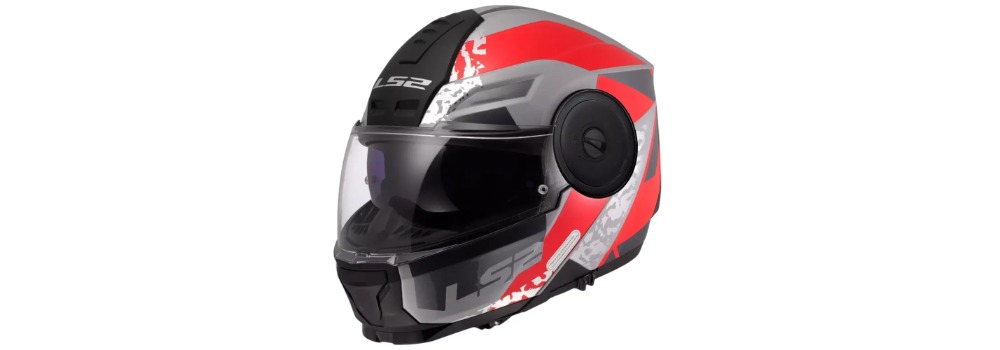
Motorcycle helmet materials
The outer shell, the hardest and strongest part of the helmet, is usually made of thermoplastic, fibreglass, tri-composite or carbon fibre. Each material has its advantages: thermoplastic is the most affordable, fibreglass is lighter and usually offers the best value for money, and carbon fibre is among the lightest and strongest.
All of them follow the same European certification, 22.05 or 22.06, and much of the protection depends on the EPS foam inside. Compare the four in our article on motorcycle helmet materials.

Parts of a motorcycle helmet
A helmet is made up of five main parts: the outer shell, the inner shell, the inner padding, the visor and the fastening. In addition, many include other elements such as the nose guard, the chin curtain, the pinlock or spoilers, and they can be combined with an intercom.
Knowing each piece helps you understand what protects and what improves comfort. Review them in our guide to the parts of a motorcycle helmet.
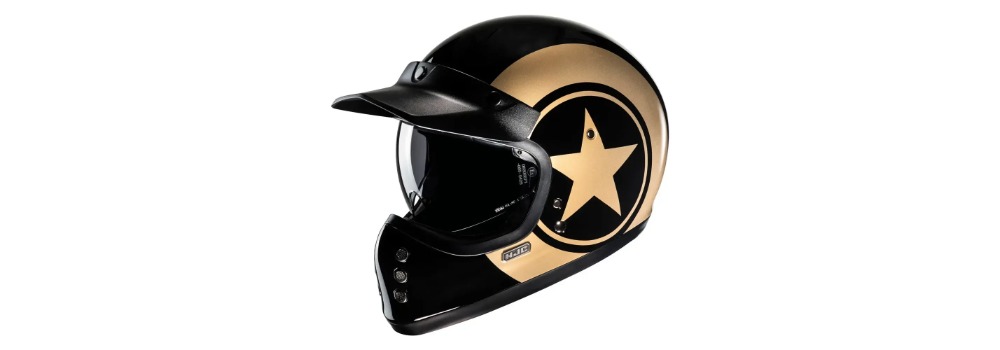
Motorcycle helmet certifications and approvals
Approval guarantees that the helmet has passed impact, retention and other critical safety tests. To ride in Europe, the helmet must carry ECE certification, which today comes in two versions: ECE 22.05 and the more demanding ECE 22.06.
There are also other certifications and programmes, such as P/J for modular helmets, FIM for competition, the British SHARP programme and others outside Europe, such as DOT, SNELL or JIS. Find out what each one means in our article on motorcycle helmet certifications.
How to choose the size of a motorcycle helmet
A helmet only protects properly if it is your size. To get it right, measure your head circumference with a tape measure held horizontally, just above the eyebrows, and compare it with the manufacturer’s size guide, because sizes are not standardised.
The helmet should be snug but not tight, and should not move when you turn your head. For kids’ helmets, check the size guide on the product page. Learn how to do it step by step in how to choose a motorcycle helmet size.

Conclusion
Choosing a helmet well means knowing its types, materials, parts and certifications, and getting the size right. With this guide you have the basis to decide with confidence. At Outlet Moto you will find motorcycle helmets of every type to put it into practice.


